
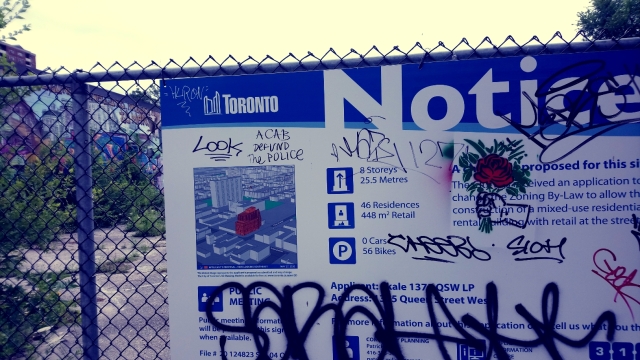
{image description: A large white and blue sign affixed to a chainlink fence, a City notice with the familiar refrain: A Change Has Been Proposed to This Site. A corner lot on Queen West in Parkdale, overgrown grass, wildflowers, and cracked concrete, is rumoured to become another condo soon. The sign has been graffitied with multiple tags, ‘ACAB / DEFUND THE POLICE’, and a spraypaint-stencil hand holding a red rose. Only a few days later, I walked by again and saw that the sign had either been scrubbed clean or replaced.}
Violence and shame are often intertwined for me. When I am the one who seems violent, I mean. A few days ago, I wrote about suppressing my emotions, ignoring my needs, and then witnessing how that shows up in my body: as shallow breaths, a feeling of tension, sore hips, locked joints, fatigue.
What happens when that tension is released at an inopportune moment?
The city is volatile. People in the city are volatile, I mean. Volatile and petty.
On Wednesday the 22nd, I’d scheduled an appointment to pick up a library book. Books I’d placed a hold on back in February and March have slowly been coming in this Summer, an email alert with a link to book a pick-up showing up in my inbox. At 1PM, I was picking up a book my twin had recommended me in Winter: Hello I Want to Die Please Fix Me: Depression in the First Person by Anna Mehler Paperny. Yellow pink red cover screaming. The book was handed to me in a brown paperbag with twine handles, just like the other post-shutdown library book I’d signed out several weeks earlier: McMindfulness: How Mindfulness Became the New Capitalist Spirituality by Ronald E. Purser. I sat down on nearby concrete steps to rearrange my backpack and make room for the book, wiping sweat from my brow with a vintage floral handkerchief. My plan next was to sit down at a park and write letters. I’d brought my zippered pouch of snail mail supplies with me, but when I double-checked it on the steps, I realized that though I’d brought a stack of letters to respond to, and postage stamps and blank envelopes stamped with return address, too, I’d forgotten my stationery at home. It was too far for me to walk back, so I decided I’d drop by the nearby Salvation Army. I didn’t want be inside public places, but the last few times I’d walked beyond my garden to work on correspondence, my plans had been interfered with by elements outside my control, so I was more determined this time. They’d have vintage stationery, they always do. It’d only take a minute.
Observing volatility does not exempt me from feeling it, from acting hostile, reacting with rage.
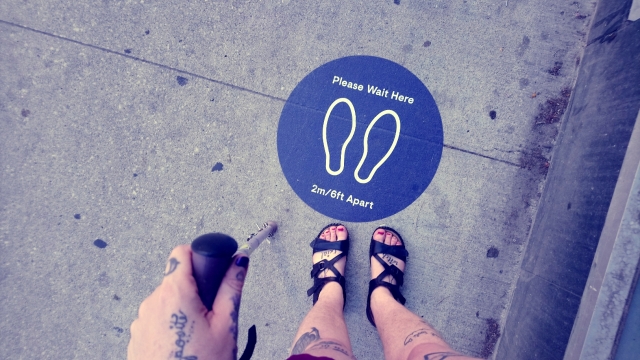
I found the stationery I was looking for. A retro floral set from the 80’s, still plastic-wrapped, a Japanese set with illustrated cats, a red set with butterflies and roses. I grabbed a stack of old envelopes, too. Dilly-dallied and found a pair of black lace shorts with big pockets, then joined the line-up. It had become longer than I’d seen a line-up there before, especially with physical-distance stickers on the floor, and I was waiting back at the shelves of shoes and lingerie. (I love digging through old lingerie and finding the rare piece that fits.)
A noisy family who’d been shouting their conversations across the distance of the entire store was now at the front of the line, carts overflowing. Their voices still raised, interrupting each other, they put each item on the counter, argued about whether or not they needed said item, haggled the price – which the cashier was having none of – and on and on. People waiting in line were clearly growing irritable and impatient. Sighing, rolling their eyes at one another, checking the time, tapping their toes. Everybody was wearing a mask, holding an item or two.
I wasn’t feeling impatient yet – I was feeling sympathetic for the cashier. I’ve been a cashier and I know how it grinds you down. In my cashiering jobs, I was constantly catching colds, sick at least once a month for weeks at a time, customers constantly condescending. Crying behind the counter, etc. But after a while, one person in the line confronted them, and then someone else was yelling, and someone else. Multiple line-ups had formed, despite the stickers on the floor indicating where to stand, and the signs posted to shelves with directions – when the man in front of me told a woman next to him that she was supposed to wait behind me, not alongside him, and we simultaneously gestured toward the red stickers on the floor, she became upset with both of us. I shrugged and kept out of it.
The noisy family, angry now at being confronted, started shouting louder, addressing everybody in the store. Things like, Shut up! I’m a nice person! And, when getting too close to other customers, I don’t need distance! God loves me! Then others were shouting, exasperated: We don’t care about god!
I was trying to imagine the scene from each person’s perspective. Each member of the noisy family. Especially as one adult daughter kept asking her mom to calm down, calm down, Mom. Imagining the mind, the life, of the person in line who spoke up first, and the next. The young cashier, trying to be as kind as possible, not wanting confrontation, conflict. Telling the family they’re a dollar short. And nobody reaching into their pockets to offer change for the remaining cost.
Finally another staff member emerges, and another, attempting to deescalate the situation. Not raising their voices, not threatening anything. Asking them to stop yelling, asking them to pay for their items and leave. One of them starts yelling that the first woman in line who confronted her has been stealing. Nobody reacts to this. And they are finally shuffled out the door and into the parking lot, carrying multiple plastic bags, still arguing amongst themselves.
When the next woman in line checks out, she waits inside the store, says the family is still in the parking lot and she doesn’t want to go outside until they’ve left. Somebody else checks out and then I do, too. Outside again, I realize that my five-minute errand to the thrift store has now been closer to forty-five minutes.
A few blocks down, I sat on the ground of a parkette where a community garden is planted, abundant with raspberries and sunflowers, marigolds, tangled forget-me-nots close to the ground. I held a coffee from Jinks, one of the last places I’d been pre-shutdown – this had been my first time returning, and they’re doing take-out orders. When I took out pen and paper, it was much later than I’d planned. I ended a letter to my twin telling her I hope I don’t get caught in the rain. And then it was raining before I’d sealed the envelope.

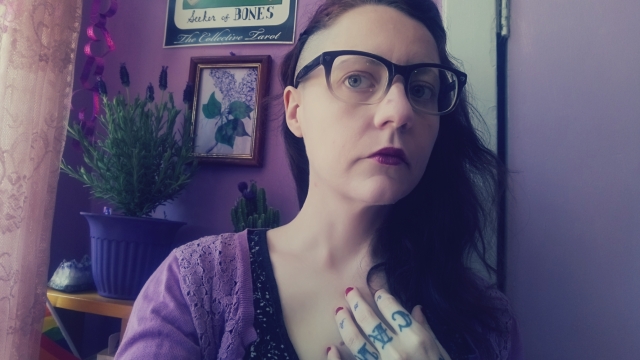
{Selfie taken that afternoon. My shoulders are bare, with the black floral straps of my jumper visible, as well as purple-plum bra straps, and the purple suede string of an amethyst necklace. I’m wearing a floral mask with petals of purple and yellows and pinks, with black, round tortoiseshell glasses. My green hair is in pigtails. There’s a concrete pillar behind me, and a set of heavy brown doors with a sign that reads, PLEASE NO LOITERING.}
For a few minutes, I sat in place, thinking I’d wait it out. But it became clear that it was gonna become more than a quick moment of light rain. Packed up and walked to the nearest streetcar stop, having not been on transit for four months. Within only a block, the rain became much heavier, the skies and streets more grey. The stop, although without seats, did provide a narrow shelter.
As I waited, I was alone. A moment before the streetcar approached, a woman joined me under the shelter. Despite the space provided, she stood directly beside me, so I stepped down a few feet. She was dressed in a designer yellow blouse with small florals, shorts, sandals, shiny red lipstick, no mask.
I carried my backpack, a red totebag, my cane, and my coffee. Encumbered, knowing there’ll be unavoidable consequences for my body. The streetcar stopped and the doors slid open. A TTC operator stepped inside to talk to the driver. The four or five steps to the entrance – off the platform, to the ground, up to the vehicle – were a bit of a struggle, and the woman behind me with the yellow blouse began muttering for me to hurry up. She stepped closer and closer, as if she could push me onto the streetcar and get to her destination faster. As I lifted my right foot up the step, she leaned her right hand against the outside of the streetcar, her body pressing toward and her face nearly peering over my shoulder, and continued, in a sarcastic tone, telling me to hurry up. I paused there, turned around, face-to-face.
“What the fuck is wrong with you?” I said. “Stay away from me.”
I don’t remember what she said, or if she responded, but she definitely did not take a step back. Her unmasked face was in mine, and we were both being rained on. Obviously we still have a six-foot distance requirement, and masks are mandatory on public transit and inside every business. I was pissed off, but I know myself, and I know I would’ve been equally pissed off regardless whether or not we were experiencing a pandemic.
“STAY AWAY FROM ME, STAY THE FUCK AWAY FROM ME,” I continued shouting. I wasn’t coherent enough to tell her that threatening to push a disabled person on public transit (which has happened to me countless times) is unacceptable in the very best of circumstances, so I was just screaming, trying to get her to give me some space, to see the absurdity of her impatience.
She was yelling now, too, two or three feet from me. In my exasperation, I threw my half-full cup of coffee in her face. First it sputtered through the sippy-cup, and then the lid fell off and the remainder of the coffee splashed across her yellow blouse and dripped down the pavement.
I threw the empty cup at her, still shouting. She reached out as if to grab me or hit me, but I blocked her with her my right arm, hand now free, and then I grabbed onto my cane and raised it like a baseball bat, strength in my aim.
I have a fear of my own violent outbursts, of making an impulsive decision, harming someone, likely a total stranger who caught me at a bad time, and all the consequences that might entail. At the same time, I have a fear of dying due to somebody’s careless or neglect, ie a car accident or a fire. My cane is not the strongest weapon, but it’s what I’ve got. I could imagine bashing her face with it, but I also knew that hanging out in a jail cell during a pandemic wasn’t how I wanted to spend the rest of the day / week / month / whatever, and I also knew that she wasn’t worthwhile; perhaps I’d scared her enough, adequately emphasized my point. It wasn’t until I swung my cane toward her that she finally backed up, backed toward another of the open doors where she could board the empty streetcar.
Through it all, the TTC operators remained silent. For the most part, they were out of my line of sight, and I suppose I imagined they were too stunned to respond, too caught off guard to know what to do.
I didn’t want to get onto the streetcar. Especially the same one as her. I’d swung my cane close to her shoulder and face, but I’d also let my arms fall weak, avoiding any impact at all. As she backed up and began to enter the streetcar, my body became less tense, and I decided to walk away. As I went back to the concrete platform and waited for the crosswalk light to turn green, the rain became heavier. I knew I wouldn’t be able to walk home like this, that I’d have to find somewhere to duck into and wait it out. Waiting for the light to change, I became thoroughly soaked, and I walked one block until I found the hidden recess of an empty storefront. I stepped into the cozy alcove, stood behind the unlocked black iron gate between the step and the locked glass door, and took a deep breath. Watched the downpour over Queen West.
After a few minutes, it occurred to me that someone could’ve called the cops. Or at they might’ve called TTC security, or warned the next driver about the screaming weirdo assaulting fellow passengers. I couldn’t get on another streetcar, and I worried about cops poking their heads around the corner of the alcove, asking me questions, wondered whether or not they’d keep distance, wondered if I’d be able to act less agitated and pissed off. I texted my twin and close friend to let them know what was up. In case something happened. Also to process, and/or laugh about it. I noticed that this was one of few public altercations that hadn’t resulted in tears, and hadn’t resulted in suicidal thoughts. I told myself it was probably because I’ve been so detached lately. Things don’t hold the same meaning as they used to.
And as I described the situation through multiple texts, answered questions, made jokes, I realized I didn’t have much to fear: this wasn’t assault. It was self-defense. Crip self-defense.
I remembered an incident a few months ago, the end of Winter, pre-shutdown, when a man on the street began harassing me as I and my partner walked by – I tried to ignore him at first. He seemed drunk, and he was yelling at me that my cane isn’t real, I’m too young, my illness isn’t real. I know these are thoughts that people think, and I’m far-too-accustomed to being accosted by strangers on the street who wanna talk to me about my body, my pain, my cane, my trauma. But they are not usually screaming at me, not usually screaming that I’m a liar. He, too, became among those I’ve turned toward and raised my cane as a weapon – I will always remember the astonished and frightened expression on his face, the way he physically backed off. I did my screaming, strangers witnessed our interaction, and I walked away, cane in one hand, my partner’s hand in the other. And the man continued yelling, yeah – he’d stepped out into Queen West, and I told him I hope he gets hit by a streetcar and survives to experience disability firsthand – but I was through, and I only wanted to go home and recover.
I also remembered when, a few months ago, my partner and I had picked up some gardening supplies at the Home Hardware in Parkdale. As we exited the store, a longer line-up had formed, and some people were standing side-by-side, reducing the width of the sidewalk, thus reducing access. As we loaded the car, someone using an electric mobility scooter was trying to get by, but between the two people standing side-by-side, and the garbage can at the curb, there wasn’t enough room – to the disabled person scooting by, who nobody would acknowledge or step aside for, simply ran over one woman’s foot to get through. I gave them an imaginary high-five.
After I threw my coffee in her face, after I walked away, I hid under the alcove of an empty storefront for over and hour. At some point, I decided to text my partner to see if he was nearby – he’d been in the recording studio for the afternoon, but if I caught him at the right time, he’d be driving by my cozy hideout on the way back. After mixing one more track, he was on the way.
As I ducked into the car, indeed I noticed a cop car parked across the street, but I couldn’t read the license plate, and the view through the windows remained obscured in the storm. On my street, parking, a similar cop car slowed down as it passed us, but again, I couldn’t read their info, and felt it must only be a coincidence. I know their threats and intimidation, but I’m also prone to paranoia, so.

{image description: Gladiolas in shades of hot pink and pastel pink bloom and grow tall along the base of power lines on a sidewalk corner, red brick wall to the right. Tigerlilies, bright orange, bloom, too. In the distance, an empty road and some orange and black construction pylons.}
I recently learned about DBT-based Six Levels of Validation, as practiced between therapist and client, explained here by Kelly Koerner, paraphrased below:
1. Show interest and be awake.
Literally the most basic, ordinary form of listening to someone: don’t fall asleep. Don’t check-out. Don’t check your phone or the time, etc. when someone needs to be listened to.
2. Accurate reflection.
Akin to active listening. Accurate reflection is a way we show the other person we understand what they’re saying – if we’ve misunderstood, or they want to provide more clarity, this is where that happens.
3. Imagining yourself in their position.
Beyond accurately reflecting what one person is saying or feeling, this is where the listener goes deeper, develops a better sense of what the other is feeling, and from there is able to ask more thoughtful questions and have a better idea of the thoughts and emotions arising in a given individual in a particular situation.
4. Validate based on history.
The listener has retained information about the individual’s past experiences, and is able to call this up in conversation as a way to make sense of the current situation, encourage the individual’s self-reflection, and show that their current feelings or worries are understandable given their history and context. Remembering information from the past also creates a sense of object constancy.
5. Validate based on current circumstances.
This is where the listener actively validates someone’s emotions regardless of their past, of their known or unknown history. “It totally makes sense that you’re upset about x, y, z, and that you responded the way you did.”
6. Radical genuineness.
Being a real live human being, and communicating as equals. In a therapeutic setting, the therapist becomes open and non-defensive, truly hearing and understanding the client, and responding almost like a compassionate friend would. The client is not a patient, not “disordered,” and not somebody who is “less than” the therapist. Examples look like: allowing tears to fall, swearing or using explicit language, laughing at a client’s joke, self-disclosing a small piece of personal information to relate to the client, or calling out bullshit.
Though the link is focused on the therapeutic relationship, I’m thinking of the Six Levels of Validation in interpersonal and romantic relationships, too. There are forms of validation that are more active, functional, beyond listening, that fall into the categories above – for example, knowing when a friend or partner needs time to process, and knowing when a friend or partner would feel supported by being given a snack, a cup of tea, or a hand on their shoulder, etc. Relational discomfort is unavoidable – we can’t always know what to do in the moment when someone is experiencing distress. Sometimes we feel distressed with them and cannot act, or sometimes we don’t know what they’re feeling, we’re misreading them, or we’re projecting our own thoughts, feelings, and fears onto them.
An example: While texting Dean about needing a ride home in the rain, I offered small details about the incident on the streetcar, but I was non-specific, and reassured him that I was okay. When he picked me up, he knew that that wasn’t the right moment to ask me what happened, to get me to dredge up my angry feelings; what I needed was a safe ride home, and a warm drink once we got there. It’s an uncomfortable situation, but shows functional validation: it might be Level 1, 4, or 5. (He is awake, he knows not push me to elucidate when I might be distressed, he knows a bit about my history of angry altercations with non-disabled people, and he’d be pissed off if he were in a similar situation, or were with me when it happened.)

{image description: Camera aims upward at the top floor of a grey stucco building, and a clear blue sky. Three windows are visible. One has a sign for Psychic Readings with a phone number. The other two are split into six panes, each one with a golden decal of a zodiac symbol. Affixed to the wall between the windows are two large signs: One is the shape of an open hand, the palm, wrist, and fingertips decorated with astrological symbols. The other is the shape of cards beside one another: one card has a shining sun, and other shows the head of a psychic with her hands around a crystal ball.}
It may not have been an inopportune moment after all – to respond to my feelings of rage and annoyance by throwing a cup of coffee at a non-disabled person. Although I was alone, I felt supported once I’d texted and processed with friends, especially because they asked me to keep in touch to ensure them I was safe. From there, I was able to get home safely. The level of detachment I’ve felt over the last few months is not ideal – it’s frustrating beyond language – yet it may have protected me from causing further harm to myself or to others, and ensured I didn’t alienate the people who love me.
Almost three years ago, in See the Cripple Dance, I wrote about losing my temper, about public meltdowns (On Temperance, bravado, and wanting to change the world).
“My behaviour, under remission and mania, had been verging on dangerous over the last few months, and occasionally irresponsible, but I’d managed to keep myself relatively under control, safer than I’ve been in the past. It’s not that I felt invincible – I felt/feel extremely vulnerable. But I did feel brazen and bold. I know the worst things that can happen. I want/ed to gather, steal, hoard as much magic as possible before the next disaster.”
I wrote about escalating conflict with the managers of an all-natural grocery store in a gentrifying neighbourhood when they caught me dumpstering, and dumpstering plenty. I had an opportunity to retreat, even to keep what I’d gathered, but I was triggered, and I responded by retaliating at them for approaching me, screamed at them about capitalism and waste until they changed their tone and began berating me, threatening to call the cops (they didn’t) and lock the dumpster (they did, but it’s been locked and unlocked multiple times by other trash-gatherers), etc.
The night is marked in my memory for several reasons. One, as my then-boyfriend and I walked back to his place together in silence, as he made me a cup of peppermint tea and gave me a chance to breathe and to cry before asking if I’d like to discuss what had happened, I felt held in some way, and vulnerable and scared and apologetic, too, but eventually somewhat understood and forgiven. It meant a kind of healing for me, and though we had an uncomfortable conversation and disagreement about the situation afterward, I still felt cared for, and this night often came up as a particular phase of healing for me. However, two: when we broke up eight or nine months later, he cited this night as a reason not to trust me, a reason to worry not only about my violent outbursts, but about when he might become a target, too. I became especially enraged after having attributed a totally different meaning to that incident, and even now, it acts as a kind of rumpled page in the long history of my healing process, and continues to come up as fear in current relationships, as well as a topic in therapy sessions and journal entries. (“One day I’ll scare everybody away for good!”)
I bring it up to show that functional validation, regardless of future outcomes, can still be healing in the moment, and can result in a felt sense of validation and comfort – rare for so many of us. Also, I bring it up to show that one moment of attunement doesn’t indicate a perfect partner or a perfect relationship, but one step of many in a non-linear healing process. Now I can connect these two moments in two very different relationships, and draw different lessons and meanings from them.
I don’t think I was over-reacting in the current situation, and I didn’t endanger anybody but myself (although I did feel smug self-satisfaction as it occurred to me that the woman in the yellow blouse might need to explain the coffee stains to someone upon arrival at her destination, might even need to be tested for COVID-19, and that in both these situations, sure, she could say, “Some crazy person on the TTC threw their coffee at me,” but she’d have to know in her heart-of-hearts that that’s not the full truth; she’d have to know, ‘I told a disabled person to hurry up multiple times as they struggled with pain, inaccessibility, and rough weather, and when I got too close to them, they retaliated.’)
As time passed, I felt less ashamed.
Another friend of mine texted: “That sounds like self-defense to me. I’m glad you got home safe and that you could access your power in that moment. I have a warm fuzzy feeling in my chest from hearing that story.”
I said: “I worry I’ll be written off as a violent weirdo one day.”
And they said: “Best kinda weirdo.
…But what I really mean is that low-grade violence is the everyday norm and every instance of someone fighting back is beautiful.”
Violently Yours,

P.S.: If you’ve benefited from my writing in any way – if my words have inspired you, helped you feel less alone, or sparked some weird feeling within you; if you’ve felt encouraged, or curious, or comforted – please consider compensating me by offering a donation of any amount. Whether you’ve been reading my writing for years, or just stumbled into me this afternoon, I invite you to help me sustain the process! ALSO! I have a Patreon now! Please join me.













































 Maranda Elizabeth